
Macro Tracking: Eat Smarter, Not Just Less
Counting calories only tells half the story. Understanding your macros helps you fuel your body properly — whether you're building muscle, losing fat, or optimizing energy.
Quick Summary
- • The three macronutrients are protein, carbohydrates, and fat — each with distinct roles
- • Typical macro targets: 45–65% carbs, 20–35% fat, 10–35% protein (USDA DRI)
- • People with diabetes or IBS may need condition-specific macro adjustments
- • BiteRight provides meal records and nutrient estimates for review
Key Takeaways
- Macros are carbs, protein, and fat — the building blocks of all food
- Tracking macros is more informative than counting calories alone
- Your ideal ratio depends on your body, activity level, and goals
- BiteRight offers meal logging and estimated nutrient information
What Are Macronutrients?
Macronutrients — or "macros" — are the nutrients your body needs in large amounts to function and thrive. Every food you eat is made up of three primary macros:
Carbohydrates
Your body's main energy source
Found in: grains, fruits, vegetables, legumes
Protein
Essential for muscle repair, hormones & enzymes
Found in: meat, fish, eggs, dairy, legumes
Fats
Crucial for brain health & cell function
Found in: oils, nuts, avocado, fatty fish
Understanding your macros means you're not just eating less — you're eating smarter.
Why Tracking Macros Is More Powerful Than Just Counting Calories
Calories tell you how much you're eating. Macros tell you what you're actually fueling your body with. Here's what balanced macro tracking helps you achieve:
Build muscle or lose fat effectively
Get the right protein for muscle and manage carbs for fat loss.
Sustain energy throughout the day
Balanced macros prevent energy crashes and keep you focused.
Improve portion control
Understanding macros makes portion sizes intuitive over time.
Support hormonal & metabolic balance
Adequate fats and protein support hormone production.
What's the Right Macro Ratio for You?
There's no one-size-fits-all answer — your ideal ratio depends on your goals and lifestyle:
| Goal | Protein | Carbs | Fat |
|---|---|---|---|
| Weight Loss | 40% | 30% | 30% |
| Muscle Gain | 35% | 45% | 20% |
| Maintenance | 30% | 40% | 30% |
| Low-Carb/Keto | 25% | 10% | 65% |
Want to review the food behind the estimates?
Use a meal record in BiteRight to review food and serving information. The app does not establish which macro targets are medically appropriate for you.
Macro-Friendly Meal Ideas
High-Protein Options
- Grilled chicken with quinoa and broccoli
- Greek yogurt with berries and chia seeds
Balanced Meals
- Salmon with sweet potato and kale
- Stir-fried tofu with rice noodles and mixed veggies
Low-Carb Ideas
- Zucchini noodles with pesto and grilled shrimp
- Egg muffins with spinach and cheese
Common Mistakes When Tracking Macros
Guessing portion sizes
Use measuring cups or a food scale until you develop intuition
Forgetting cooking oils and sauces
These add significant fat and calories — always log them
Ignoring beverages and snacks
That latte or handful of nuts counts toward your daily totals
Not adjusting as your goals change
Recalculate your macros when your activity or goals shift
Review Macro Estimates in a Meal Record
BiteRight accepts meal photos, voice descriptions and text. The resulting nutrient values are estimates that depend on the identified foods and portions.
Meal Photos and Nutrient Estimates
Take a meal photo and review the identified foods and estimated macronutrients.
Daily Progress Visualization
See how your protein, carb, and fat intake stacks up against your goals.
A Meal Record for Review
Use logged meals to prepare questions about food choices. No personalized meal-plan or clinical-suitability claim is made here.
Questions About Your Food Record
Use the record to prepare nutrition questions for a clinician or dietitian. AI estimates do not replace professional advice.
Frequently Asked Questions
Explore meal logging.
Explore meal logging and review nutrient estimates. See current app-store pricing, included features and subscription terms before downloading.
Work out your macro grams with the free calculator
Are you a hospital or insurer? Explore our nutrition API evaluation.
Related reading
Articles from the current published catalogue. A related topic or source date does not establish clinical review.
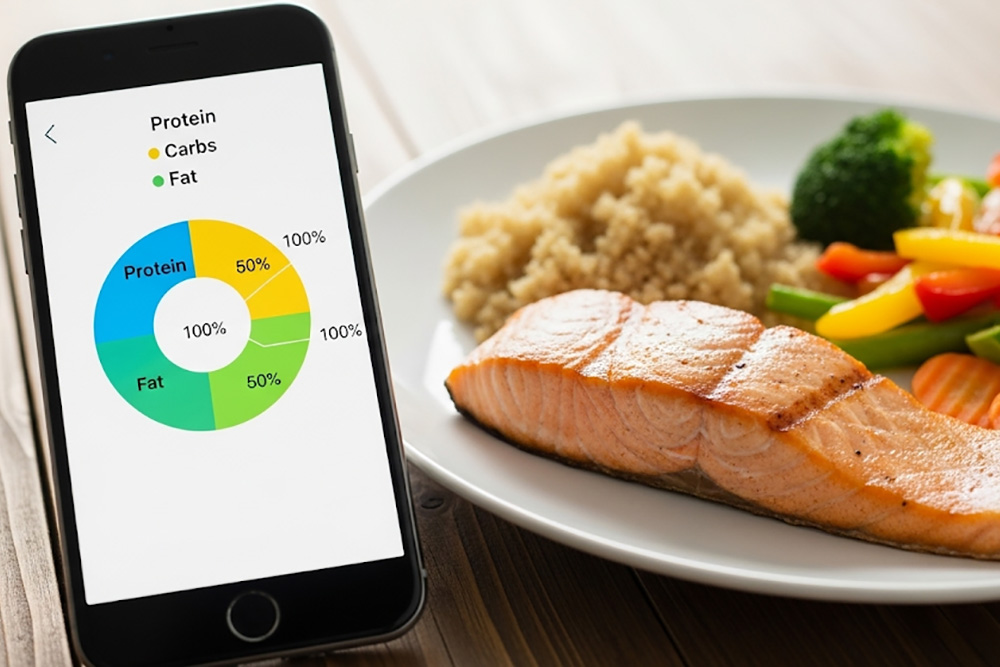
Macro Tracking for Beginners: How to Balance Protein, Carbs, and Fat Without Going Crazy
Published in source:
Calories get all the attention, but the quality of those calories matters even more. That’s where macro tracking comes in. Using a macro tracker can help

Why Macro Tracking Works When Diets Don’t
Published in source:
Let’s be real: most diets fail. They’re rigid, joyless, and built to collapse the moment life gets busy. Enter the macro tracker—a flexible, data-backed

Beyond the Numbers: How a Macro Tracker Builds Long-Term Food Freedom
Published in source:
Food freedom and food tracking sound like opposites. How can logging your protein, carbs, and fats possibly lead to freedom? The truth is, using a macro
Master Your Macros: Why a Macro Tracker Beats Calorie Counting
Published in source:
Calories tell part of the story—but macros tell the whole truth. If you’ve hit a wall with calorie tracking, or if you’re trying to eat better without
Macro Tracker 101: How to Count Macros Without Losing Your Mind
Published in source:
Macro Tracker 101: How to Count Macros Without Losing Your Mind Tracking your food doesn’t have to mean obsessing over every bite or turning into that

How to Choose a Food Tracking App: Features That Actually Matter
Published in source:
Quick Answer: The best food tracking app is the one you will actually use daily. Prioritize fast logging (barcode, AI text, photo), accurate databases,