
Food recognition that knows Arabic food.
Count calories in Arabic and Middle Eastern meals by photo, voice or text. BiteRight's food data includes a Bahraini database and localised dishes, and Arabic is available throughout.
Nutrition values are estimates. BiteRight does not give medical advice, and recognition accuracy for this cuisine has not been published.
Why regional food data matters.
Regional food data
BiteRight's food data includes a Bahraini food database and localised dishes, alongside national databases from the US, UK, France, Australia and Canada.
Mixed dishes, broken down
Rice dishes, stews and shared plates rarely match one label. BiteRight breaks a custom dish into likely ingredients, then looks up the nutrients for each.
Arabic throughout
Arabic is available across BiteRight, so people can log meals in the language they use at home. It sits alongside English, French and Spanish.
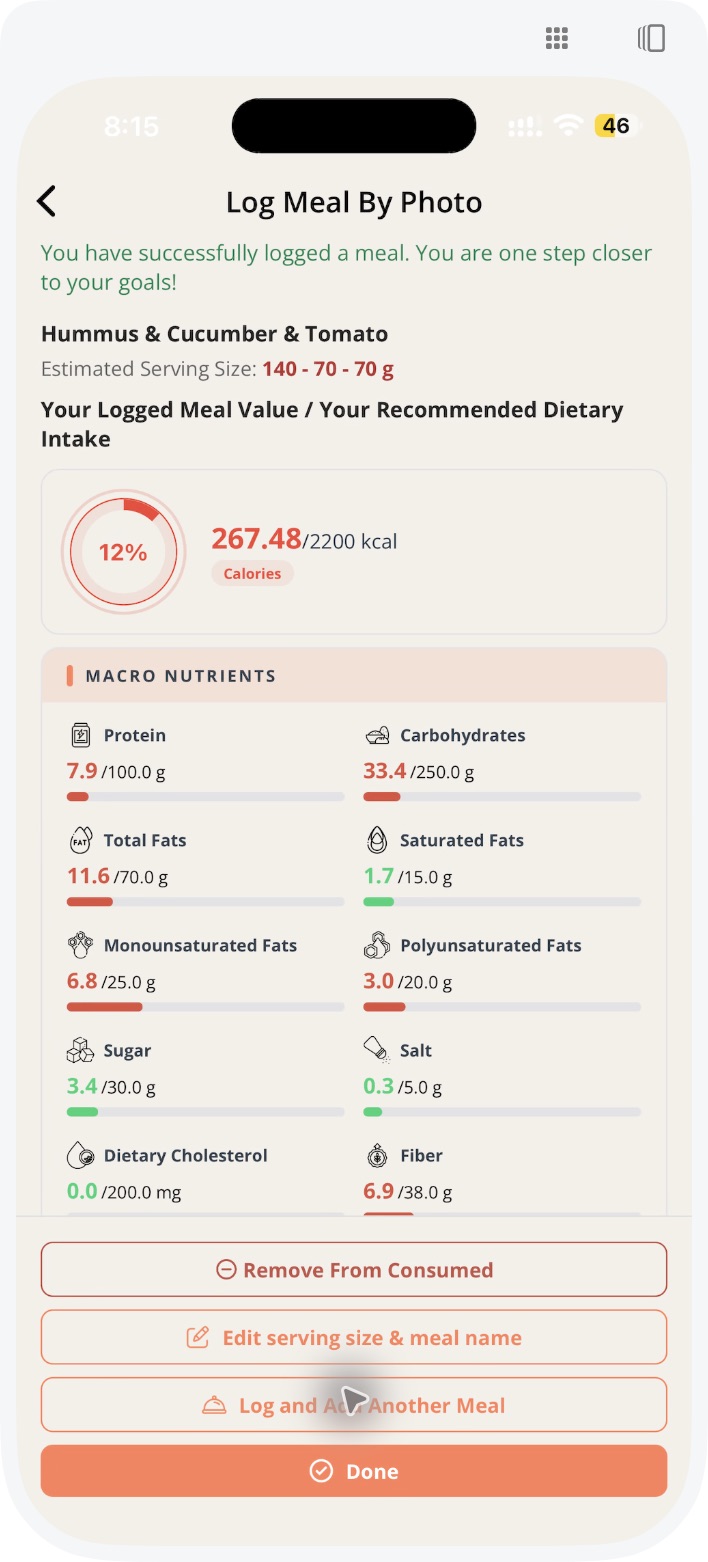
A real example: hummus, cucumber and tomato.
This demo meal was logged in the app from a photo, then the total serving was edited to 280 g. It shows one meal, not recognition accuracy in general.
- Oil and ghee
- A photo cannot show how much went into the pot. Ask users to add it, or correct the estimate.
- Shared plates
- Log the portion one person ate, not the whole platter.
- Home recipes
- The same dish varies by family and country, so treat values as estimates.
For people logging meals.
Use the BiteRight app on iPhone or Android to log meals and review estimated calories and macros.
Explore the app →For teams serving the region.
Evaluate food logging for a health app or care programme. The API is in private preview, and access is by request.
See the food recognition API →Guide: building Arabic food logging →