
For clinical trials and research
Dietary intake capture for clinical trials and research.
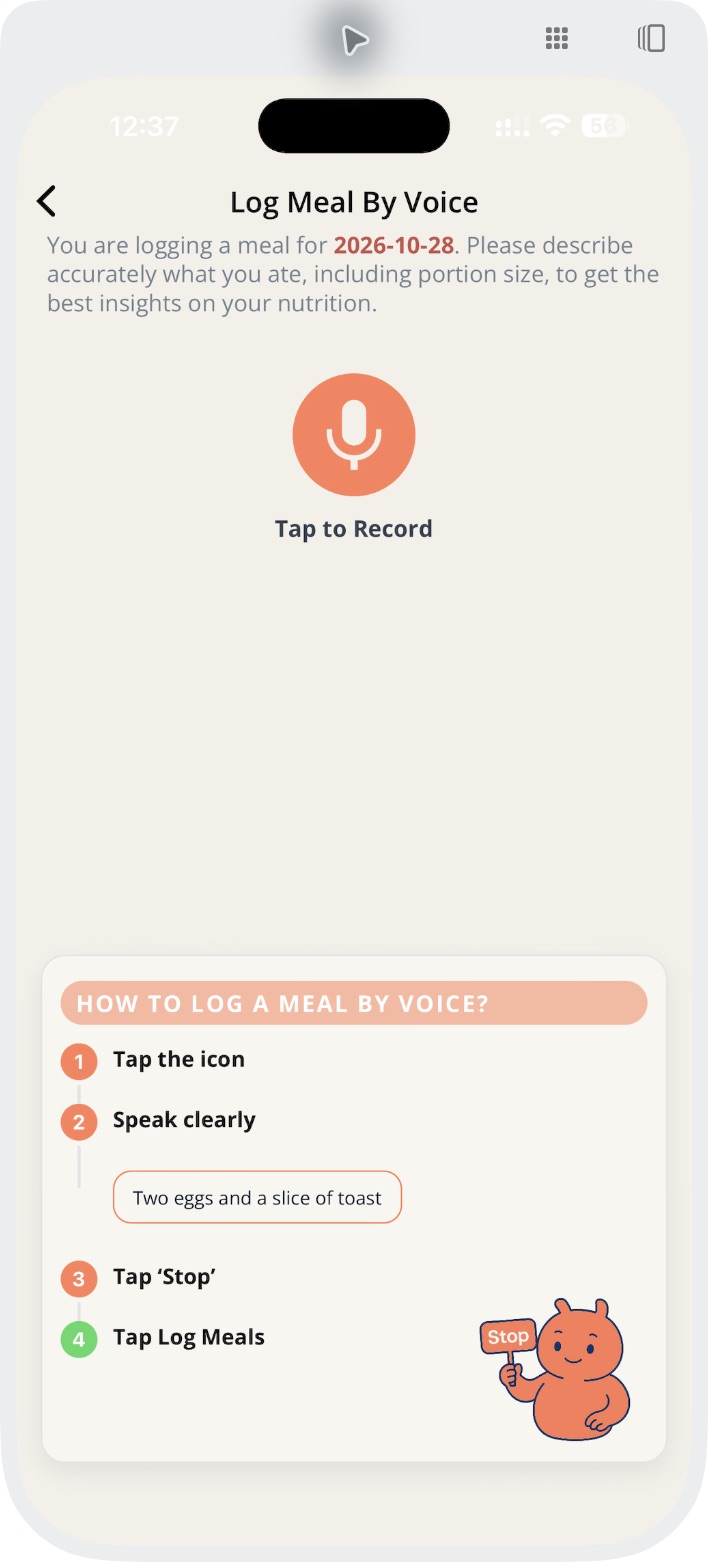
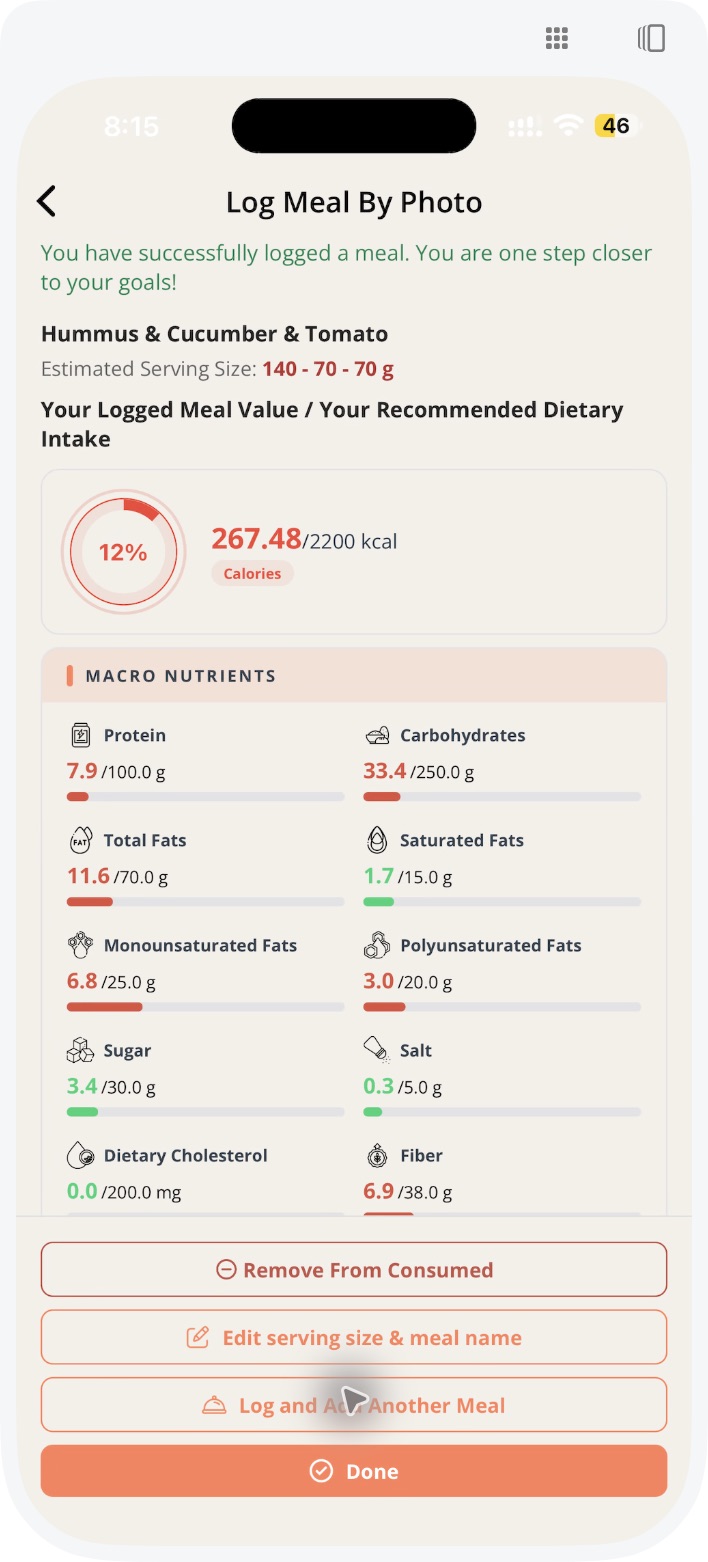
BiteRight makes dietary intake easier for study participants to record and easier for research teams to analyse. Participants log each meal by photo, voice or text as they eat, and every entry comes back as structured data: recognised foods, estimated weight and nutrient amounts. Researchers review and export the logs in the dietitian portal, or integrate the API into the study's own app.
Last updated:
Why dietary data is hard to collect
Food diaries and recalls ask a lot of participants, and adherence drops as a study goes on. Entries arrive late, incomplete or hard to code.
Logging a meal with a photo or a short voice note takes less effort, and every entry comes back as structured nutrient data ready to analyse.
How it works, step by step.
Example: Example Research Unit, a fictional study team.
- Step 1
Participants are enrolled
A 14-day nutrition sub-study asks participants to log every meal.
- Step 2
Meals are logged as they happen
Participants photograph meals or describe them in a voice note, in English or Arabic.
- Step 3
Each meal becomes structured data
BiteRight returns the foods, estimated weight, calories, macronutrients and micronutrients for each entry.
- Step 4
The team reviews and exports
Coordinators check entries in the portal and export the meal logs for analysis.
What BiteRight gives your team.
Lower participant burden
Photo, voice and text logging, so participants can record a meal as they eat it
BiteRight app or your study app
Structured nutrient data
Recognised dish, estimated weight, ingredients, calories, macronutrients, vitamins, minerals, omega-3 and omega-6 and caffeine per meal
API and portal
Data you can analyse
Export of participants' meal logs
Dietitian portal
Traceable food data
Nutrient values grounded in national databases including USDA FoodData Central, CoFID, ANSES-Ciqual, AUSNUT and the Canadian Nutrient File
Food data
Multilingual and Gulf studies
Arabic input for photo, voice and text, and a Bahraini food-composition database
API and food data
Study-specific targets
Daily limits per participant with an alert when one is crossed, for intervention arms
API and portal
Ethics and data protection review
Oracle Cloud hosting, regional hosting, encryption in transit and at rest, and a DPA
Platform
- Oracle Cloud Infrastructure
- Regional hosting
- Encrypted in transit and at rest
- DPA for business customers
- Arabic and English input
- 2.5M+ food records
Read more about the nutrition API, the dietitian portal and how data is protected.
What BiteRight does not do.
- Nutrient values are estimates. Validate BiteRight against your study's reference method before relying on it as an outcome measure.
- BiteRight does not claim clinical validation or certification as an ePRO or eCOA system.
Questions we hear.
Can participants use the BiteRight app, or do we need our own app?
Either. Participants can log in the BiteRight app and connect to your study team's portal, or your study app can call the BiteRight API.
Can we export the data?
Yes. The portal can export participants' meal logs.
Which nutrients are returned?
Calories, protein, carbohydrate, fat, fibre and sugar, plus vitamins, minerals, omega-3 and omega-6 fatty acids and caffeine where the food data includes them.
Does it work for studies in the Middle East?
Yes. The API accepts Arabic for all inputs, and the food data includes a Bahraini food-composition database and localised Middle Eastern dishes.
Has BiteRight been validated for research use?
BiteRight makes no validation claim. We recommend comparing it with your reference method, such as weighed records or 24-hour recalls, in a pilot.
Where is participant data stored?
BiteRight runs on Oracle Cloud Infrastructure. Data is encrypted in transit and at rest, hosting can be regional, and a data processing agreement (DPA) is available for business customers.
Plan dietary capture for your next study.
Tell us about your protocol, participants and the nutrients you need. Sandbox access is available on request.
Discuss your study